



FOR SMALL LAW FIRMS

Consistency, trust, and continuity across the firm.

For small law firms that want defensible practices across matters and staff, not bureaucracy or micromanagement. Bakari helps you build systems that protect privilege, support audit-readiness, and create the kind of cross-partner alignment small firms often struggle to achieve.

When a staff member leaves, what leaves with them?

In most small firms, more than anyone wants to admit.

A single departure can mean weeks of catching up, redoing work, or a partner discovering a matter wasn’t filed the way they assumed. For firms operating without enterprise IT, full-time office managers, or formal knowledge management systems, the gap between the way we work and the way we should work gets carried by the next person to arrive, and the one after that.

Your firm needs systems that outlast individuals. Not because people are interchangeable, but because matters, clients, and partner agreements have to keep moving even when staff don't.

Defensible practices your team will actually use.

Bakari works with small firms to build digital systems that are consistent, documented, and shared. The goal isn’t to install new software or impose top-down compliance. It’s to build practices your partners, paralegals, and staff help shape, so the standards stick and matters move predictably regardless of who’s handling them.

What you can expect to leave with:

Consistent matter handling across partners and staff.

A shared structure for how matters are organized, named, filed, and accessed, so consistency doesn’t depend on which partner or paralegal is handling what.

Defensible documented practices.

Five to ten SOPs and shared knowledge documents covering the practices currently living in individual memories. Written in a way that supports audit-readiness and protects the firm’s defensibility position.

Clarity on confidentiality and access.

A map of your data, your systems, and your access permissions. Who can see what, who owns which process, where the gaps are, and what needs to change to protect privilege.

Solid alignment on practices.

Documented agreement on how the firm handles information, achieved through structured conversations rather than top-down mandate. So new matters and new staff arrive into a consistent system, not a series of competing preferences.

Continuity through transitions.

When someone leaves, joins, or steps away, matters continue. Onboarding takes days, not weeks. Cover periods don’t become crises.

Ready when you are.

What working together looks like.

Bakari’s approach is built around the realities of small firms: limited staff, mixed comfort with technology, the constant inflow of files and information from multiple channels (client emails, court filings, online portals), and the political complexity of partnership-based decision-making.

Engagements range from short diagnostic phases of a few weeks for firms that want visibility into risks and inconsistencies before committing to changes, to multi-month hands-on partnerships (typically three to six months) for firms ready to redesign their systems and build shared practices, to ongoing support for firms focused on long-term continuity, audit-readiness, and succession planning.

A typical engagement includes:

Upskilling is built into every engagement. Your team doesn’t need to share the same comfort with technology for this to work. We meet each person where they are, build training around what they actually need, and never ask anyone to fake confidence they don’t have.

Bakari is platform-agnostic. If you already have software in place, we’ll help you use what’s there. If you need new tools, recommendations come second, and only when something genuinely solves a problem you have.

Confidentiality isn't a feature. It's the foundation.

Privilege, defensibility, and consistent matter handling aren’t add-ons to the work. They’re the foundation it’s built on. Bakari designs practices that protect privilege, support audit-readiness, and create the cross-partner alignment small firms often struggle to achieve. Engagements respect the political reality of partnership-based firms, including the need for partner consensus before practices are rolled out and the discretion required when handling sensitive matters.

Information shared with Bakari during an engagement is treated as confidential. The systems we design together include appropriate access controls, data lifecycle considerations, and protection for the matters and clients your firm serves.

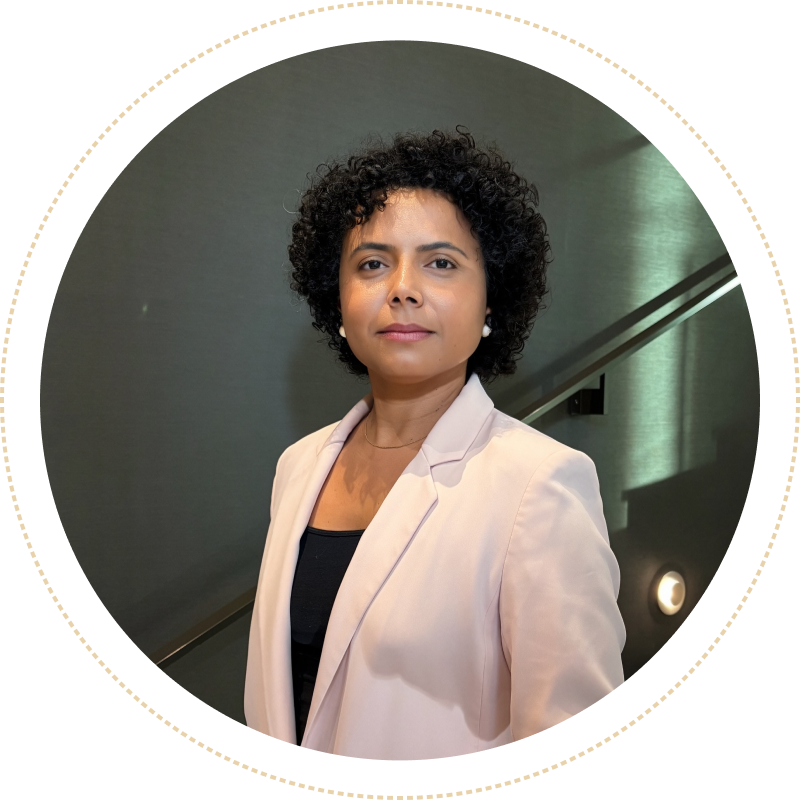
Tatiane Reis
Founder, Bakari Consulting

The philosophy behind Bakari.

Bakari Consulting was born when Tatiane Reis watched a small business owner become physically ill from process chaos. She’d seen the gap her whole career: consultancies that promise growth and optimization, but miss the human cost of organizations held together by individual memory and goodwill. Platforms that sell you a tool, then leave you to figure out the rest.

Bakari is led by Tatiane Reis, a process and data specialist with cross-sector experience across private, public, and nonprofit organizations, and a PhD candidate at York University researching women’s labour. The methodology draws on Lean Management principles and a bottom-up approach, so the systems we design together actually fit how your firm works.

Tatiane is also familiar with the day-to-day operational realities of small legal practices: application processes across multiple platforms, Legal Aid Ontario billing workflows, matter intake processes, and the administrative friction that builds up around them. The systems Bakari designs are grounded in that familiarity, not abstract from it.

The work isn’t to enforce discipline from the top down. It’s to build the systems that should have been there all along, shaped by the people doing the work and durable enough to outlast any one of them.

Some questions you might be sitting with.

For most engagements, there are two kinds of people to involve: the partners making the decision, and the staff and paralegals closest to the day-to-day work. Both matter. Sometimes it’s a single managing partner who relays back to the others; sometimes it’s a small working group across roles. Bakari is comfortable working in either model.

That’s the norm, not the exception. Building partner consensus is part of the work, not a precondition for starting. Bakari uses structured conversations to surface where partners differ, find common ground, and document the agreements that result. Engagements respect the political reality of partnership-based firms, including the need for consensus before practices are rolled out.

The work does require dedicated time, and we won’t pretend otherwise. But the time you spend on the project isn’t separate from your daily work. It’s informed by it, and within the first month, the first time-saving measures are identified and incorporated. Most team members spend two to four hours per week directly involved, with leads or coordinators carrying a slightly heavier role.

That’s expected, and it’s not a barrier. Upskilling is built into every engagement. We meet each person where they are, build shared vocabulary as we go, and never ask anyone to fake confidence they don’t have.

Carefully. Bakari builds practices that respect privilege, support audit-readiness, and protect the confidentiality your matters require. Information shared with Bakari during an engagement is treated as confidential, and the systems we design together include appropriate access controls and data lifecycle considerations.

Yes. Building systems that handle transitions well is part of the point. If someone is hired or leaves during the engagement, the work adapts to support onboarding or knowledge transfer.

You own everything. The systems, the documentation, the practices, all of it is yours to maintain independently. The systems are designed so that monitoring, tracking, and reporting become smooth parts of how the firm operates, not extra tasks layered on top. For firms that want ongoing support, there’s a Partnership tier that provides regular check-ins and audit-readiness reviews, but it’s optional and the default is full handover.

Tatiane personally reviews every consultation request and gets back to you by email within three business days. You’ll hear back with either a proposed time to talk or, if Bakari isn’t the right fit for what you need, an honest note about that and a suggestion of where to look instead.

Who we are not for

Bakari is built for a particular way of working.

If you’re looking for a software-only implementation, or you’d rather a consultant permanently manage your internal processes, or you want immediate enforcement without dialogue or partner participation, then we may not be a good fit.

The work here asks for participation. That's what makes it last.

Ready to build something that holds?

The first step is a conversation. No pressure, no pitch. Just space to talk through what’s working, what isn’t, and whether Bakari is the right fit for your firm.