
For Nonprofits
Systems that hold your mission together, through every kind of change.
For nonprofits and community organizations that value continuity, capacity-building, and shared accountability, not bureaucracy or burdensome systems. Bakari helps you build digital systems that hold the work together through staff transitions, funding cycles, and the growing pains of an organization taking on more.
Small teams. Big responsibilities. Constant pressure.
When someone leaves your organization, more goes with them than anyone wants to admit.
- How grant reports were structured.
- The relationship with that one funder.
- Where last year's budget files actually live.
- The password to the donor database.
- Which volunteers can be counted on for what.
It isn’t only about people leaving. When you grow, win a bigger grant, or add a program, the informal ways of working that got you here start to strain. What felt fine at five people wobbles at fifteen. Continuity gets tested by expansion as much as by loss.
Either way, without dedicated IT or admin support, the gap between how you work and how you should work lands on whoever’s still here, on top of everything else.
Your team needs systems that hold under pressure, so your mission keeps moving whether you're weathering a loss or rising to meet new demand.
Systems your team will actually use.
Bakari works with nonprofits and community organizations to build digital systems that are consistent, documented, and shared. The goal isn’t to install new software or impose top-down compliance. It’s to build practices your team helps shape, so the standards stick and the work continues even as the team changes and grows.
What you can expect to leave with:
Consistent file and information handling across staff and teams.
A shared structure for how information is organized, named, and stored, so finding things doesn’t depend on knowing who handled it last.
Documented practices the whole team uses.
Five to ten lightweight SOPs and shared knowledge documents covering the things currently living in individual memories. Shaped through conversations across the team, so the practices reflect agreements rather than any one person’s preferences. Resilient enough to survive turnover, simple enough that the team will actually maintain them.
Clarity on who owns what.
A map of your data, your systems, and your access permissions. So you know who can do what, who owns which process, and where the gaps are when someone steps away.
Continuity through transitions and growth.
When someone leaves, joins, or steps away, the work continues. As you take on more staff, more programs, or more funding, the systems scale with you instead of buckling. Onboarding takes days, not weeks. Cover periods during funding gaps, parental leaves, or staff turnover don’t become crises.
Knowledge that doesn't depend on memory.
The relationship with funders, the rhythm of grant cycles, the institutional knowledge that’s been built over years, documented in a way your future team can actually access and use.
Reports that actually inform decisions.
Once your data is organized and consistent, pulling it into reliable reports stops being a project. Boards, funders, and program leads get the information they need to make critical decisions, on a timeline that matches how decisions actually happen.
Ready when you are.
What working together looks like.
Bakari’s approach is built around the realities of small nonprofits: limited staff, stretched capacity, mixed comfort with technology, and the political complexity of board governance and stakeholder accountability.
Engagements range from short diagnostic phases of a few weeks for organizations that want visibility before committing to changes, to multi-month hands-on partnerships (typically three to six months) for teams ready to redesign their systems and build shared practices, to ongoing support for organizations focused on long-term continuity.
A typical engagement includes:
- Staff surveys and interviews to understand how the team actually works today
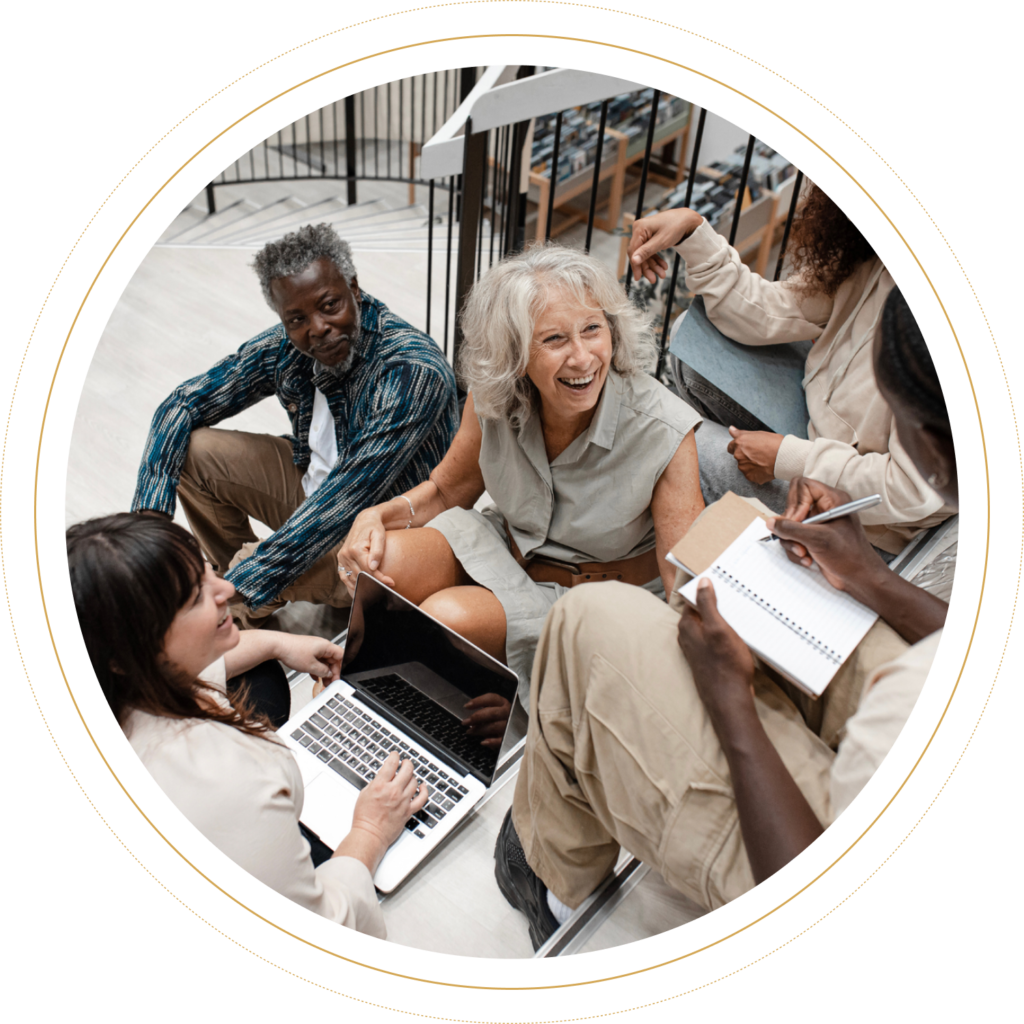
- Talking circles to surface challenges, co-design solutions, and build buy-in across staff and board
- A full file and information structure tailored to your organization
- Knowledge management setup, including shared documentation practices
- Mapping of communication flows so information moves between the right people at the right time
- A 90-day action plan with measurable milestones
Upskilling is built into every engagement. Your team doesn’t need to share the same comfort with technology for this to work. We meet each person where they are, build training around what they actually need, and never ask anyone to fake confidence they don’t have.
Bakari is platform-agnostic. If you already have software in place, we’ll help you use what’s there. Free and low-cost tools are always part of the conversation. If you need new tools, recommendations come second, and only when something genuinely solves a problem you have.
Built for capacity, not abundance.
Nonprofit budgets are tight, and funding cycles shape what’s possible. Engagements are scoped to your capacity, not to a fixed package, with free and low-cost tools always part of the conversation, and the work structured to align with grant cycles or board rhythms where it can.
A well-structured system also does double duty. The data governance, transparency, and accountability that funders look for become visible and demonstrable, strengthening the case you make to funders and the trust you build with donors. Where helpful, Bakari supports you in presenting the work to boards or funders as the capacity-building investment it actually is.
Growth brings its own strain, new staff to onboard, new reporting to manage, complexity the old way of working was never built for. Whether you’re holding steady under tight resources or stretching to meet new demand, the work meets you where you are.
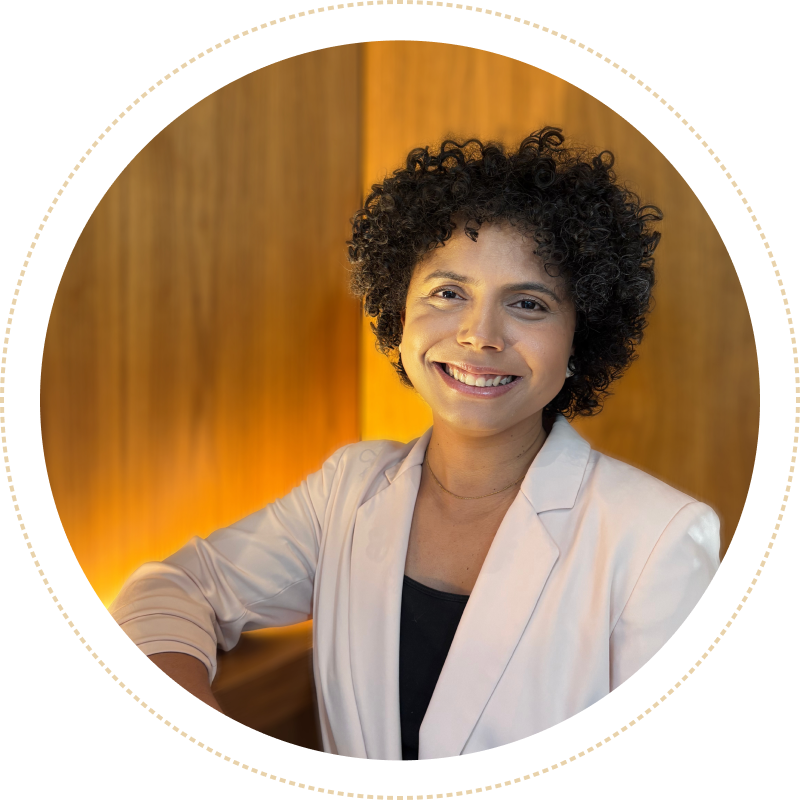
Tatiane Reis
Founder, Bakari Consulting
The philosophy behind Bakari.
Bakari Consulting was born when Tatiane Reis watched a small business owner become physically ill from process chaos. She’d seen the gap her whole career: consultancies that promise growth and optimization, but miss the human cost of organizations held together by individual memory and goodwill. Platforms that sell you a tool, then leave you to figure out the rest.
Bakari is led by Tatiane Reis, a process and data specialist with cross-sector experience across private, public, and nonprofit organizations, and a PhD candidate at York University researching women’s labour. The methodology draws on Lean Management principles and a bottom-up approach, so the systems we design together actually fit how your team works.
The work isn’t to enforce discipline from the top down. It’s to build the systems that should have been there all along, shaped by the people doing the work and durable enough to outlast any one of them.
Some questions you might be sitting with.
Who needs to be involved from our side?
For most engagements, there are two kinds of people to involve: the decision-makers (executive director, board chair, program director) and the staff closest to the day-to-day work. Both matter. Sometimes it’s a single point of contact who relays back to leadership; sometimes it’s a small working group. Bakari is comfortable working in either model.
Will our team have time for this?
The work does require dedicated time, and we won’t pretend otherwise. But the time your team spends isn’t separate from your daily work. It’s informed by it, and within the first month the first time-saving measures are identified and built in. Most team members spend two to four hours per week directly involved, with leads or coordinators carrying a slightly heavier role.
What if we don't have a strong tech background on the team?
That’s expected, and it’s not a barrier. Upskilling is built into every engagement. We meet each person where they are, build shared vocabulary as we go, and never ask anyone to fake confidence they don’t have.
What if our budget is very limited?
Engagements are scoped to your capacity, not to a fixed package. Free and low-cost tools are always part of the conversation, and the work is designed around what you can sustain rather than what looks impressive on paper. Where possible, the engagement can be structured to align with grant cycles or specific funding sources. We’ll be honest about whether what you need fits what you have, and if it doesn’t, we’ll say so.
Can the work be funded through a grant or capacity-building budget?
Often, yes. Many funders recognize systems and capacity-building as legitimate categories of investment. If you’re working on a grant application or budget that could include this work, Bakari can help you frame the engagement in language that funders understand.
How do you handle confidentiality and sensitive information?
Carefully. Donor information, beneficiary data, and other sensitive content are treated as confidential. The systems we design together include appropriate access controls and data lifecycle considerations to protect the people and partners your organization serves.
Can you help us through short-term projects, events, or transitions?
Yes, and in two different situations. If you already have a system that works and you’re facing a one-off project or event that could disrupt it, Bakari can help you protect what’s working so a temporary push doesn’t create lasting mess. And if your file management isn’t where you’d like it to be, a transition, event, or short-term project is often a good moment to build something better, because the pressure of change is exactly when clearer systems prove their worth. Either way, the work adapts to support you through the moment rather than adding to it.
What happens after the engagement ends?
You own everything. The systems, the documentation, the practices, all of it is yours to maintain independently. For organizations that want ongoing support, there’s a Partnership tier that provides regular check-ins, but it’s optional and the default is full handover.
What happens after I submit the consultation form?
Tatiane personally reviews every consultation request and gets back to you by email within three business days. You’ll hear back with either a proposed time to talk or, if Bakari isn’t the right fit for what you need, an honest note about that and a suggestion of where to look instead.
Who we are not for
Bakari is built for a particular way of working.
If you’re looking for a software-only implementation, or you’d rather a consultant permanently manage your internal processes, or you want immediate enforcement without staff participation or board dialogue, then we may not be a good fit.
The work here asks for participation. That's what makes it last.
Ready to build something that holds?
The first step is a conversation. No pressure, no pitch. Just space to talk through what’s working, what isn’t, and whether Bakari is the right fit for your organization.